

14.5K
Downloads
344
Episodes
I know that you believe in yourself, you believe in self-development and helping your children or those you influence live with a healthy mind, body and heart. For that, I applaud you. Live an Inspired Life and Flourish! The goal of this show is to help you not only raise healthy & happy children, but to also work on your own personal development. We are all born with a Gift. We are all born with Purpose. Life‘s journey is to hone and develop that Gift, as purpose changes within. Share your knowledge of self-empowerment with those you influence, after all it‘s easier to raise a child with a positive mindset than it is to fix a broken one. How you speak and how you act around your children becomes their inner voice. Once you have self-awareness it‘s easier to thrive and grow, be your child‘s inspiration and advocate for their well being. https://www.Flourish.Mom. #personaldevelopment #mindset #motivation #inspiration #successtips #selfesteem #parenting #Believe #selfhelp #goals #habits #timemanagement #success #selfcare #selflove #bestseller #inspired #FlourishMom #time #howto #coach #personalgrowth #mentalhealth #health #fitness #wellness #meditation #spirituality #loa #thesecret #womenempowerment #parentingtips #highperformance #inspiredlife #inspireddiane #greatness #growth
Episodes
Sunday Jun 19, 2022
Sunday Jun 19, 2022
Psychopharmacology is the study of how drugs affect behavior. If a drug changes your perception, or the way you feel or think, the drug exerts effects on your brain and nervous system. We call drugs that change the way you think or feel psychoactive or psychotropic drugs, and almost everyone has used a psychoactive drug at some point (yes, caffeine counts).
Understanding some of the basics about psychopharmacology can help us better understand a wide range of things that interest psychologists and others. For example, the pharmacological treatment of certain neurodegenerative diseases such as Parkinson’s disease tells us something about the disease itself.
The pharmacological treatments used to treat psychiatric conditions such as schizophrenia or depression have undergone amazing development since the 1950s, and the drugs used to treat these disorders tell us something about what is happening in the brain of individuals with these conditions. Finally, understanding something about the actions of drugs of abuse and their routes of administration can help us understand why some psychoactive drugs are so addictive. In this module, we will provide an overview of some of these topics as well as discuss some current controversial areas in the field of psychopharmacology.
Learning Objectives
- How do the majority of psychoactive drugs work in the brain?
- How does the route of administration affect how rewarding a drug might be?
- Why is grapefruit dangerous to consume with many psychotropic medications?
- Why might individualized drug doses based on genetic screening be helpful for treating conditions like depression?
- Why is there controversy regarding pharmacotherapy for children, adolescents, and the elderly?
Live an Inspired Life!
#Psychology #QueensU #Drugs
Find out more about Flourish at the links below:
➡️ https://www.Flourish.Mom
➡️ Facebook https://www.Facebook.Com/Flourish.Mom
➡️ Twitter: https://www.Twitter.Com/FlourishMom
➡️ Instagram: https://www.Instagram.com/FlourishMom
➡️ Pinterest: https://www.Pinterest.ca/WowFlourishMom
➡️ Watch on YouTube: https://youtu.be/DT--AJzSGuQ
PSYC 100: Principles of Psychology F21 by PSYC100 is licensed under a Creative Commons Attribution-NonCommercial-ShareAlike 4.0 International License, except where otherwise noted.
Note: I am a student and not a teacher. This is my learning journey that I am sharing with you :)

Sunday Jun 19, 2022
Sunday Jun 19, 2022
The goal of this module is to introduce you to the topic of hormones and behavior. This field of study is also called behavioral endocrinology, which is the scientific study of the interaction between hormones and behavior. This interaction is bidirectional: hormones can influence behavior, and behavior can sometimes influence hormone concentrations.
Hormones are chemical messengers released from endocrine glands that travel through the blood system to influence the nervous system to regulate behaviors such as aggression, mating, and parenting of individuals.
Learning Objectives
- Define the basic terminology and basic principles of hormone–behavior interactions.
- Explain the role of hormones in behavioral sex differentiation.
- Explain the role of hormones in aggressive behavior.
- Explain the role of hormones in parental behavior.
Provide examples of some common hormone–behavior interactions.
Live an Inspired Life!
Find out more about Flourish at the links below:
➡️ Facebook https://www.Facebook.Com/Flourish.Mom
➡️ Twitter: https://www.Twitter.Com/FlourishMom
➡️ Instagram: https://www.Instagram.com/FlourishMom
➡️ Pinterest: https://www.Pinterest.ca/WowFlourishMom
➡️ Listen to the Podcast: https://FlourishMom.podbean.com
PSYC 100: Principles of Psychology F21 by PSYC100 is licensed under a Creative Commons Attribution-NonCommercial-ShareAlike 4.0 International License, except where otherwise noted.
Note: I am a student and not a teacher. This is my learning journey that I am sharing with you :)
Sunday Jun 19, 2022
Sunday Jun 19, 2022
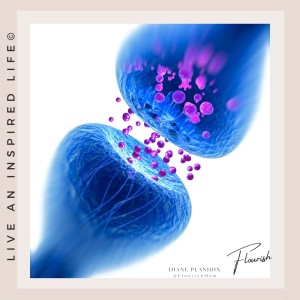
This module on the biological basis of behaviour provides an overview of the basic structure of neurons and their means of communication. Neurons, cells in the central nervous system, receive information from our sensory systems (vision, audition, olfaction, gustation, and somatosensation) about the world around us; in turn, they plan and execute appropriate behavioural responses, including attending to a stimulus, learning new information, speaking, eating, mating, and evaluating potential threats.
The goal of this module is to become familiar with the anatomical structure of neurons and to understand how neurons communicate by electrochemical signals to process sensory information and produce complex behaviours through networks of neurons. Having a basic knowledge of the fundamental structure and function of neurons is a necessary foundation as you move forward in the field of psychology.
Learning Objectives
- Differentiate the functional roles between the two main cell classes in the brain, neurons and glia.
- Describe how the forces of diffusion and electrostatic pressure work collectively to facilitate electrochemical communication.
- Define resting membrane potential, excitatory postsynaptic potentials, inhibitory postsynaptic potentials, and action potentials.
- Explain features of axonal and synaptic communication in neurons.
Live an Inspired Life!
Find out more about Flourish at the links below:
➡️ Facebook https://www.Facebook.Com/Flourish.Mom
➡️ Twitter: https://www.Twitter.Com/FlourishMom
➡️ Instagram: https://www.Instagram.com/FlourishMom
➡️ Pinterest: https://www.Pinterest.ca/WowFlourishMom
➡️ Watch on YouTube: https://youtu.be/znu3iiV-fP4
PSYC 100: Principles of Psychology F21 by PSYC100 is licensed under a Creative Commons Attribution-NonCommercial-ShareAlike 4.0 International License, except where otherwise noted.
Note: I am a student and not a teacher. This is my learning journey that I am sharing with you :)
Sunday Jun 19, 2022
Sunday Jun 19, 2022
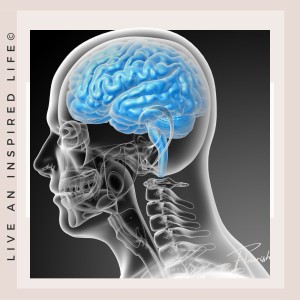
When people think of emotions they usually think of the obvious ones, such as happiness, fear, anger, and sadness. This module looks at the knowledge emotions, a family of emotional states that foster learning, exploring, and reflecting. Surprise, interest, confusion, and awe come from events that are unexpected, complicated, and mentally challenging, and they motivate learning in its broadest sense, be it learning over the course of seconds (finding the source of a loud crash, as in surprise) or over a lifetime (engaging with hobbies, pastimes, and intellectual pursuits, as in interest).
The module reviews research on each emotion, with an emphasis on causes, consequences, and individual differences. As a group, the knowledge emotions motivate people to engage with new and puzzling things rather than avoid them. Over time, engaging with new things, ideas, and people broadens someone’s experiences and cultivates expertise. The knowledge emotions thus don’t gear up the body like fear, anger, and happiness do, but they do gear up the mind—a critical task for humans, who must learn essentially everything that they know.
Learning Objectives
- Identify the four knowledge emotions.
- Describe the patterns of appraisals that bring about these emotions.
- Discuss how the knowledge emotions promote learning.
- Apply the knowledge emotions to enhancing learning and education, and to one’s own life.
Live an Inspired Life!
#Psychology #QueensU #Emotions
Find out more about Flourish at the links below:
➡️ Facebook https://www.Facebook.Com/Flourish.Mom
➡️ Twitter: https://www.Twitter.Com/FlourishMom
➡️ Instagram: https://www.Instagram.com/FlourishMom
➡️ Pinterest: https://www.Pinterest.ca/WowFlourishMom
➡️ Watch on YouTube: https://youtu.be/qVDA5BrFVto
PSYC 100: Principles of Psychology F21 by PSYC100 is licensed under a Creative Commons Attribution-NonCommercial-ShareAlike 4.0 International License, except where otherwise noted.
Note: I am a student, not a teacher. I am sharing my learning journey with you!

Sunday Jun 19, 2022
Sunday Jun 19, 2022
Basic principles of learning are always operating and always influencing human behavior. This module discusses the two most fundamental forms of learning — classical (Pavlovian) and instrumental (operant) conditioning. Through them, we respectively learn to associate 1) stimuli in the environment, or 2) our own behaviors, with significant events, such as rewards and punishments.
The two types of learning have been intensively studied because they have powerful effects on behavior, and because they provide methods that allow scientists to analyze learning processes rigorously. This module describes some of the most important things you need to know about classical and instrumental conditioning, and it illustrates some of the many ways they help us understand normal and disordered behavior in humans.
The module concludes by introducing the concept of observational learning, which is a form of learning that is largely distinct from classical and operant conditioning.
Learning Objectives
- Distinguish between classical (Pavlovian) conditioning and instrumental (operant) conditioning.
- Understand some important facts about each that tell us how they work.
- Understand how they work separately and together to influence human behavior in the world outside the laboratory.
- Students will be able to list the four aspects of observational learning according to Social Learning Theory.
Live an Inspired Life!
Find out more about Flourish at the links below:
➡️ Facebook https://www.Facebook.Com/Flourish.Mom
➡️ Twitter: https://www.Twitter.Com/FlourishMom
➡️ Instagram: https://www.Instagram.com/FlourishMom
➡️ Pinterest: https://www.Pinterest.ca/WowFlourishMom
➡️ Watch on YouTube: https://youtu.be/QaRDQ1H7qOU
PSYC 100: Principles of Psychology F21 by PSYC100 is licensed under a Creative Commons Attribution-NonCommercial-ShareAlike 4.0 International License, except where otherwise noted.
Note: I am a student and not a teacher - I am sharing my learning journey with you!

Sunday Jun 19, 2022
Sunday Jun 19, 2022
Learning is a complex process that defies easy definition and description. This module reviews some of the philosophical issues involved with defining learning and describes in some detail the characteristics of learners and of encoding activities that seem to affect how well people can acquire new memories, knowledge, or skills. At the end, we consider a few basic principles that guide whether a particular attempt at learning will be successful or not.
Learning Objectives
- Consider what kinds of activities constitute learning.
- Name multiple forms of learning.
- List some individual differences that affect learning.
- Describe the effect of various encoding activities on learning.
- Describe three general principles of learning.
Live an Inspired Life!
Find out more about Flourish at the links below:
➡️ Facebook https://www.Facebook.Com/Flourish.Mom
➡️ Twitter: https://www.Twitter.Com/FlourishMom
➡️ Instagram: https://www.Instagram.com/FlourishMom
➡️ Pinterest: https://www.Pinterest.ca/WowFlourishMom
➡️ Watch on YouTube: https://youtu.be/c2pGUCMmqD8
PSYC 100: Principles of Psychology F21 by PSYC100 is licensed under a Creative Commons Attribution-NonCommercial-ShareAlike 4.0 International License, except where otherwise noted. Note: I am a student, not a teacher - I am sharing my learning journey with you!
Sunday Jun 19, 2022
Sunday Jun 19, 2022
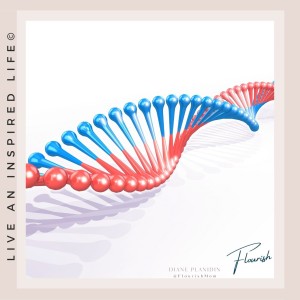
Early life experiences exert a profound and long-lasting influence on physical and mental health throughout life. The efforts to identify the primary causes of this have significantly benefited from studies of the epigenome—a dynamic layer of information associated with DNA that differs between individuals and can be altered through various experiences and environments.
The epigenome has been heralded as a key “missing piece” of the etiological puzzle for understanding how development of psychological disorders may be influenced by the surrounding environment, in concordance with the genome. Understanding the mechanisms involved in the initiation, maintenance, and heritability of epigenetic states is thus an important aspect of research in current biology, particularly in the study of learning and memory, emotion, and social behavior in humans.
Moreover, epigenetics in psychology provides a framework for understanding how the expression of genes is influenced by experiences and the environment to produce individual differences in behavior, cognition, personality, and mental health. In this module, we survey recent developments revealing epigenetic aspects of mental health and review some of the challenges of epigenetic approaches in psychology to help explain how nurture shapes nature.
Learning Objectives
- Explain what the term epigenetics means and the molecular machinery involved. - Name and discuss important neural and developmental pathways that are regulated by epigenetic factors, and provide examples of epigenetic effects on personality traits and cognitive behavior.
- Understand how misregulation of epigenetic mechanisms can lead to disease states, and be able to discuss examples.
- Recognize how epigenetic machinery can be targets for therapeutic agents, and discuss examples.
Live an Inspired Life! #Psychology #QueensU #MentalHealth
Find out more about Flourish at the links below:
➡️ Facebook https://www.Facebook.Com/Flourish.Mom
➡️ Twitter: https://www.Twitter.Com/FlourishMom
➡️ Instagram: https://www.Instagram.com/FlourishMom
➡️ Pinterest: https://www.Pinterest.ca/WowFlourishMom
➡️ Watch on YouTube: https://youtu.be/IOEUKLpco8Q
PSYC 100: Principles of Psychology F21 by PSYC100 is licensed under a Creative Commons Attribution-NonCommercial-ShareAlike 4.0 International License, except where otherwise noted.
Note: I am a student and not a teacher - I am sharing my learning journey with you!

Sunday Jun 19, 2022
Sunday Jun 19, 2022
Evolution or change over time occurs through the processes of natural and sexual selection. In response to problems in our environment, we adapt both physically and psychologically to ensure our survival and reproduction. Sexual selection theory describes how evolution has shaped us to provide a mating advantage rather than just a survival advantage and occurs through two distinct pathways: intrasexual competition and intersexual selection.
Gene selection theory, the modern explanation behind evolutionary biology, occurs through the desire for gene replication. Evolutionary psychology connects evolutionary principles with modern psychology and focuses primarily on psychological adaptations: changes in the way we think in order to improve our survival.
Two major evolutionary psychological theories are described: Sexual strategies theory describes the psychology of human mating strategies and the ways in which women and men differ in those strategies. Error management theory describes the evolution of biases in the way we think about everything.
Learning Objectives:
- Learn what “evolution” means.
- Define the primary mechanisms by which evolution takes place.
- Identify the two major classes of adaptations.
- Define sexual selection and its two primary processes.
- Define gene selection theory.
- Understand psychological adaptations.
- Identify the core premises of sexual strategies theory.
- Identify the core premises of error management theory, and provide two empirical examples of adaptive cognitive biases.
Live an Inspired Life!
#Psychology #QueensU #Evolution
Find out more about Flourish at the links below:
➡️ Facebook https://www.Facebook.Com/Flourish.Mom
➡️ Twitter: https://www.Twitter.Com/FlourishMom
➡️ Instagram: https://www.Instagram.com/FlourishMom
➡️ Pinterest: https://www.Pinterest.ca/WowFlourishMom
➡️ Watch on YouTube: https://youtu.be/9pKXWjivtmw
PSYC 100: Principles of Psychology F21 by PSYC100 is licensed under a Creative Commons Attribution-NonCommercial-ShareAlike 4.0 International License, except where otherwise noted.
Note: I am a student and not a Teacher - I am sharing my learning journey with you!

Sunday Jun 19, 2022
Sunday Jun 19, 2022
People have a deep intuition about what has been called the “nature–nurture question.” Some aspects of our behavior feel as though they originate in our genetic makeup, while others feel like the result of our upbringing or our own hard work. The scientific field of behavior genetics attempts to study these differences empirically, either by examining similarities among family members with different degrees of genetic relatedness, or, more recently, by studying differences in the DNA of people with different behavioural traits.
The scientific methods that have been developed are ingenious, but often inconclusive. Many of the difficulties encountered in the empirical science of behaviour genetics turn out to be conceptual, and our intuitions about nature and nurture get more complicated the harder we think about them. In the end, it is an oversimplification to ask how “genetic” some particular behavior is. Genes and environments always combine to produce behavior, and the real science is in the discovery of how they combine for a given behavior.
Learning Objectives
- Understand what the nature–nurture debate is and why the problem fascinates us.
- Understand why nature–nurture questions are difficult to study empirically.
- Know the major research designs that can be used to study nature–nurture questions.
- Appreciate the complexities of nature–nurture and why questions that seem simple turn out not to have simple answers.
Live an Inspired Life!
#Psychology #QueensU #Destiny
Find out more about Flourish at the links below:
➡️ Facebook https://www.Facebook.Com/Flourish.Mom
➡️ Twitter: https://www.Twitter.Com/FlourishMom
➡️ Instagram: https://www.Instagram.com/FlourishMom
➡️ Pinterest: https://www.Pinterest.ca/WowFlourishMom
➡️ Watch on YouTube: https://youtu.be/oxJMSVfOzQA
PSYC 100: Principles of Psychology F21 by PSYC100 is licensed under a Creative Commons Attribution-NonCommercial-ShareAlike 4.0 International License, except where otherwise noted.
Note: I am a student and not a teacher - I am sharing my learning journey with you :)
Sunday Jun 19, 2022
Sunday Jun 19, 2022
Because of its ability to determine cause-and-effect relationships, the laboratory experiment is traditionally considered the method of choice for psychological science. One downside, however, is that as it carefully controls conditions and their effects, it can yield findings that are out of touch with reality and have limited use when trying to understand real-world behavior.
This module highlights the importance of also conducting research outside the psychology laboratory, within participants’ natural, everyday environments, and reviews existing methodologies for studying daily life
Learning Objectives
- Identify limitations of the traditional laboratory experiment.
- Explain ways in which daily life research can further psychological science.
- Know what methods exist for conducting psychological research in the real world
Live an Inspired Life!
Find out more about Flourish at the links below:
➡️ Facebook https://www.Facebook.Com/Flourish.Mom
➡️ Twitter: https://www.Twitter.Com/FlourishMom
➡️ Instagram: https://www.Instagram.com/FlourishMom
➡️ Pinterest: https://www.Pinterest.ca/WowFlourishMom
➡️ Watch on YouTube: https://youtu.be/lxEHccMaAME
PSYC 100: Principles of Psychology F21 by PSYC100 is licensed under a Creative Commons Attribution-NonCommercial-ShareAlike 4.0 International License, except where otherwise noted.
Note: I am a student and not a teacher - I am sharing my learning journey with you :)